
As an Amazon Associate, we earn from qualifying purchases.
Quick Answer: A 3-day backpacking trip requires the “Big Three” (backpack, shelter, sleep system) plus water filtration, food, clothing layers, and navigation. This guide gives you a complete packing list with gear recommendations at every budget — from beginner to ultralight.
The Big Three — Where 60% of Your Pack Weight Lives
Every experienced hiker on r/CampingGear and r/Ultralight will tell you the same thing: get the Big Three right and everything else falls into place. These three items make up 60% or more of your pack weight, so investing wisely here saves your back on the trail.
Step 1: Choose Your Backpack

For a 3-day trip, you need a 50-65 liter backpack. Smaller packs won’t fit a bear canister and 3 days of food. Larger packs encourage overpacking.
The Osprey Atmos AG 65 ($340.57, 8% off) is the most recommended backpacking pack on the internet — and it deserves that reputation. The Anti-Gravity suspension system distributes weight across your entire back, not just your shoulders. Adjustable torso length, hip belt pockets, and a rain cover make it trail-ready out of the box.
✅ 65L — perfect for 3-day trips
✅ Anti-Gravity suspension — best weight distribution in its class
✅ Adjustable torso fit
✅ Rain cover included
Budget alternative: If $340 is too much, the Kelty Redwing 50 (~$130) is a solid starter pack.
Step 2: Choose Your Sleep System
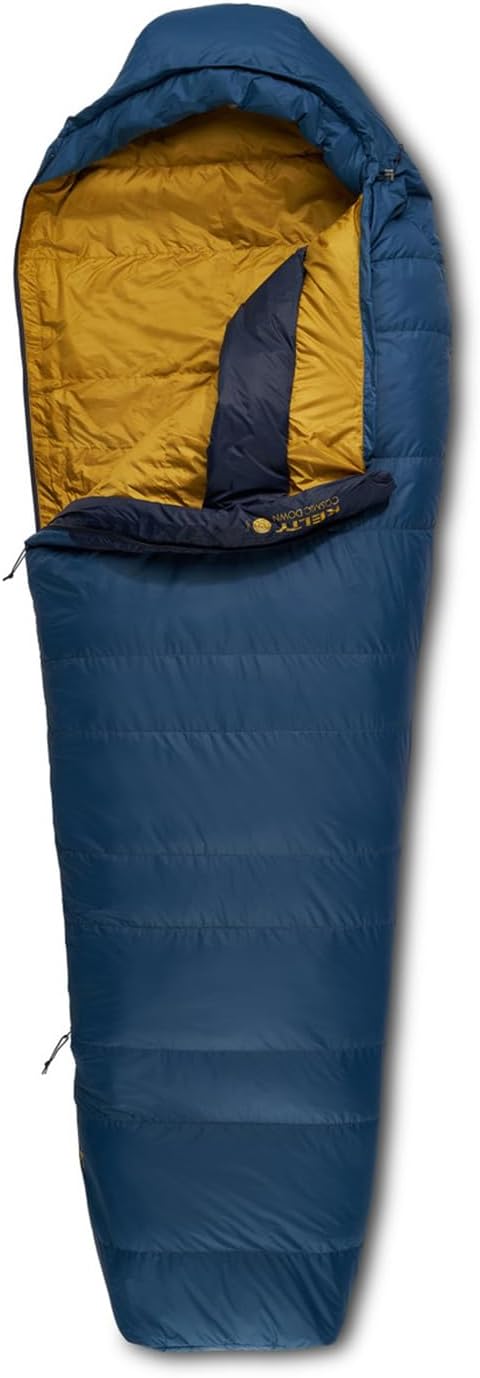
Your sleep system = sleeping bag + sleeping pad. Both are essential — the bag keeps you warm from above, the pad insulates from below.
The Kelty Cosmic 20 ($189.95) is the best entry-level down sleeping bag for 3-season backpacking. At 2 lbs 8 oz with a 20°F rating, it handles spring through fall comfortably. The 550-fill down is recycled and PFAS-free.
✅ 20°F rating — covers 3 seasons
✅ 2 lbs 8 oz — light enough for backpacking
✅ Down insulation — warm and compressible
Budget alternative: Coleman Brazos ($59.99) if weight isn’t a concern.
Don’t forget a sleeping pad. The Nemo Switchback ($40) or Therm-a-Rest Z Lite ($45) are proven budget foam pads. Without a pad, you’ll lose body heat through the ground no matter how good your bag is.
Step 3: Water Filtration

Never drink untreated water on the trail. Giardia and other waterborne pathogens can ruin your trip — and your next two weeks.
The Sawyer Squeeze ($55.19, 15% off) is the gold standard. 3 oz, 100,000-gallon filter life, removes 99.99999% of bacteria. This kit comes with the upgraded Cnoc 2L bladder. Fill, squeeze, drink — it’s that simple.
✅ 3 oz — barely notice the weight
✅ 100,000-gallon filter life — lasts forever
✅ Cnoc bladder included
Step 4: Cooking

For a 3-day trip, you need a reliable way to boil water for dehydrated meals and morning coffee.
The Jetboil Flash ($144) boils water in 100 seconds with auto ignition — no matches needed. The integrated cooking cup and insulating cozy mean you boil, eat, and pack up fast. It’s the most popular backpacking stove on the trail for a reason.
✅ Boils water in 100 seconds
✅ Auto ignition
✅ Integrated cup — all-in-one system
✅ Fuel-efficient — one canister lasts 3-4 days
Budget alternative: BRS-3000T ultralight stove ($20) + any pot. Lighter and cheaper, but no auto ignition and no insulated cup.
Step 5: The Complete Packing Checklist
Shelter & Sleep
☐ Backpack (50-65L)
☐ Tent or tarp
☐ Sleeping bag (rated 10-15°F below expected lows)
☐ Sleeping pad
☐ Pillow (stuff sack with clothes works too)
Water & Food
☐ Water filter (Sawyer Squeeze)
☐ Water bottles or bladder (carry 2-3L capacity)
☐ Stove + fuel canister
☐ Spork/utensil
☐ Food: 2,500-3,500 calories per day (dehydrated meals, bars, trail mix, instant oatmeal)
☐ Bear canister or hang bag (check trail requirements)
Clothing (3-day trip)
☐ Hiking pants/shorts (wear 1, pack 1)
☐ Base layer top (merino wool or synthetic)
☐ Insulating layer (fleece or puffy jacket)
☐ Rain jacket (always — weather changes fast)
☐ 3 pairs hiking socks (merino wool)
☐ Underwear (merino wool dries fast)
☐ Sun hat
☐ Warm hat (for camp evenings)
Navigation & Safety
☐ Map + compass (don’t rely solely on phone)
☐ Phone + portable battery bank
☐ Headlamp + extra batteries
☐ First aid kit
☐ Whistle
☐ Sunscreen + bug spray
Comfort & Hygiene
☐ Trowel (for digging cat holes — pack out all waste in some areas)
☐ Toilet paper + ziplock bag
☐ Hand sanitizer
☐ Toothbrush + small toothpaste
☐ Camp towel (small, quick-dry)
The #1 Mistake First-Time Backpackers Make
Overpacking. Every first-timer brings too much. Your target base weight (everything except food, water, and fuel) should be under 20 lbs. If your pack weighs 35+ lbs before food and water, you’ll be miserable by mile 3.
Lay out everything you think you need, then remove 30% of it. You don’t need 5 shirts for 3 days. You don’t need a full-size towel. You don’t need a camp chair. Every ounce adds up on the trail.
Frequently Asked Questions
How much does a 3-day backpacking trip cost to gear up?
Budget setup: $400-$600 (covers the essentials with budget brands). Mid-range: $800-$1,200 (quality gear that lasts years). Premium/ultralight: $1,500-$2,500+. You don’t need premium gear for your first trip — budget gear gets you on the trail.
How much food should I bring for 3 days?
Plan for 2,500-3,500 calories per day depending on trail difficulty and your body size. That’s roughly 1.5-2 lbs of food per day. For 3 days: 4.5-6 lbs of food total. Dehydrated meals, bars, trail mix, instant oatmeal, and tuna packets are trail staples.
Do I need a tent or can I use a tarp?
For your first trip, bring a tent. Tarps are lighter but require skill to set up properly and offer less weather protection. A 2-person backpacking tent (3-4 lbs) gives you a comfortable, protected shelter while you learn.
Recommended Gear Summary
✅ Osprey Atmos AG 65 — $340.57
✅ Kelty Cosmic 20 Sleeping Bag — $189.95
✅ Sawyer Squeeze Water Filter — $55.19
✅ Jetboil Flash Stove — $144
Related articles you might like: